At Gartside Street Dental Lounge in Manchester city centre, our clinicians share practical guidance to help you make confident treatment decisions.
“Will it hurt?” is the single most common question we are asked at consultations, and it is a fair one. The dentist’s reputation for pain was earned in the era of slower drills, weaker anaesthetic, and a culture that treated patient discomfort as part of the job. Modern UK dentistry has changed in almost every one of those dimensions, and most procedures now sit somewhere between mild pressure and almost nothing at all. This post is an honest, procedure-by-procedure breakdown of what dentistry actually feels like in 2026, written by a clinician rather than a marketing department, including where pain genuinely still happens and how we manage it.
A lot has changed quietly over the last twenty years. Topical numbing gels are now routine before any injection. Modern local anaesthetic cartridges are stronger and more reliable than the formulations of a generation ago. Slow-flow injection techniques and computer-controlled delivery systems have transformed how injections feel. Magnification and digital imaging have made treatment more precise and shorter. And digital scanning has replaced the gloopy impression trays that many people remember as the worst part of a crown appointment. Each of these is small individually; together they have completely changed the experience.
The injection is the part that worries most people, so it is worth explaining in detail. Before any needle goes near you we apply a flavoured topical anaesthetic gel to the gum and leave it for sixty to ninety seconds. The surface tissue goes numb, so the puncture itself is not normally felt. The technique then matters more than the needle. Pain during a dental injection is largely caused by anaesthetic being delivered too quickly into the tissue; deliver it slowly and most patients describe a vague pressure sensation rather than pain. Many private practices, including ours, use slow-flow or computer-controlled delivery devices that pace the injection automatically.
Once you are properly numb, you should feel no sharp pain during a filling, a crown preparation, or a routine extraction. You may feel pressure, vibration, the sound of the drill, water, and the suction in your cheek — but not pain. If at any point you do feel pain, you raise your hand and we stop and add more anaesthetic. This is normal and we expect it; some patients metabolise local anaesthetic faster than others, and topping up is not a sign that anything has gone wrong.
A typical filling, then, is uneventful. Topical gel goes on, the injection is given over a minute or so, and we wait until the area is fully numb before starting. The drilling phase is over within a few minutes for most fillings. Afterwards your lip and cheek will feel numb for one to three hours depending on which tooth was treated. Once the numbness wears off, mild gum tenderness is possible for a day, and the tooth itself may be a little sensitive to cold for a week or two while the nerve settles down. Anything beyond that warrants a phone call.
A hygiene appointment is the procedure where patients are most often surprised. The image many people carry is of metal instruments scraping painfully along teeth. Modern UK practice mostly uses ultrasonic scalers, which feel like a cold spray of water with a vibration through the tooth. There can be sensitivity in spots where gums have receded or where there is heavy tartar against the root, but this is usually addressed with a numbing rinse, a topical gel, or in occasional cases a small amount of local anaesthetic. Hygiene visits are far less uncomfortable than most people remember. A simple extraction, again under good local anaesthetic, is more pressure than pain. You will feel the tooth being moved and you will hear sounds you might prefer not to, but the actual sensation should not be painful while we are working. Surgical extractions, including most wisdom teeth, involve more post-operative soreness — typically a peak around forty-eight hours afterwards, then a steady decline over a week. Alternating paracetamol and ibuprofen at the recommended doses handles this well for most patients.
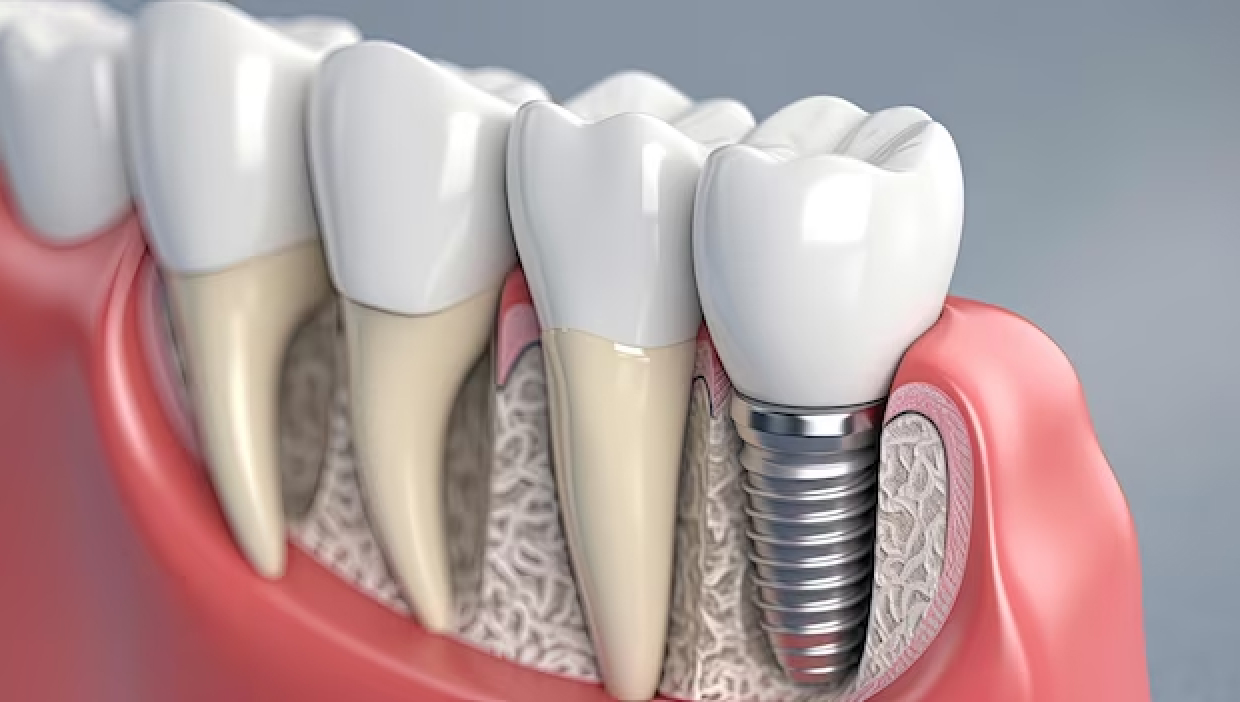
Implant placement is one of the procedures where modern reality and old reputation diverge most sharply. Bone itself has no pain receptors, so the drilling phase of an implant placement is genuinely not painful once you are numb. Most discomfort comes from the gum, which is well managed with local anaesthetic. The first twenty-four to forty-eight hours afterwards involve some soreness and swelling, similar to an extraction, and we provide post-op instructions and pain relief that handle this well. Patients are often surprised that they slept normally that night. Read more about what implant treatment involves. Root canal treatment carries the worst reputation of any procedure in dentistry, and it is almost entirely undeserved. Almost all the pain people associate with root canals is actually the pain of the abscess that brought them to the dentist in the first place — once the infected nerve is removed, the pain stops. The treatment itself, performed under proper local anaesthetic, feels very similar to having a deep filling. Modern rotary nickel-titanium files have shortened most root canal appointments significantly compared with twenty years ago, and success rates with current techniques sit around 85 to 95 per cent.
Cosmetic procedures sit at the lower end of the discomfort spectrum. Composite bonding involves no drilling on healthy enamel and almost no sensation at all. Veneers involve a small amount of enamel removal, done under local anaesthetic, and a brief period of cold sensitivity for one to two weeks while the temporary veneer is worn before the final ones are bonded in. Whitening usually causes brief, intermittent zings of cold sensitivity for the first day or two of treatment that resolve completely afterwards.
It is worth setting expectations for the post-operative window honestly. For a routine filling or hygiene visit there is typically no pain at all, just a few hours of numbness. For an extraction or implant, expect soreness peaking around forty-eight hours and improving thereafter over a week. For a root canal or surgical extraction, three to five days of mild-to-moderate soreness is normal, well managed by over-the-counter painkillers. Anything that is increasing rather than decreasing on day three, or anything accompanied by spreading swelling, fever, or a bad taste, warrants a phone call rather than another tablet.
It also matters to understand that anxiety amplifies physical pain. Patients who arrive tense, shallow-breathing, and gripping the chair experience procedures more intensely than patients who arrive relaxed. Some of this is physiological — adrenaline lowers your pain threshold — and some of it is anticipation. Learning to relax the jaw, breathe slowly, and trust the team usually has a bigger effect on perceived pain than any single technical change. If you tend towards anxiety, our guide to nervous patient care covers what we offer. Our position on this is simple: we never want a patient to be in pain during a procedure, and if you ever are, you tell us, and we stop. There is no badge of honour for sitting through discomfort silently, and there is no irritation from us at being asked to top up anaesthetic. The pacing of the appointment is in your hands as much as ours, and a procedure that needs a five-minute pause is a normal procedure, not a failed one.
If a fear of pain has been keeping you from booking treatment you know you need, the honest answer is that the gap between what you are imagining and what modern dentistry actually feels like is usually large. The most useful next step is an unhurried consultation where we can talk you through exactly what your treatment would involve, sensation by sensation, before you commit to anything. You can book online or call us, and you are welcome to ask every question on this list before any work is scheduled. Ready to Transform Your Smile?
Take the first step towards your dream smile. Book a free consultation with our expert team at our Manchester clinic and discover how we can help you achieve the confidence you deserve.