At Gartside Street Dental Lounge in Manchester city centre, our clinicians share practical guidance to help you make confident treatment decisions.
If the thought of sitting in a dental chair makes your stomach tighten, you are very much not alone. Surveys consistently suggest that around one in four UK adults experience meaningful dental anxiety, and roughly one in ten describe a phobia severe enough to avoid the dentist for years — sometimes decades. At Gartside Street Dental Lounge in Manchester, a significant proportion of the patients we see each week describe themselves as nervous, and we have built our practice around treating that fear with the same seriousness as the dental work itself. This post is for anyone who has been postponing booking, or who has tried before and walked back out. We want to explain, plainly, how our nervous patient dental care in Manchester works and what your options are. It helps to draw a line between dental anxiety and dental phobia. Anxiety is the uneasy, slightly dread-filled feeling many people get in the days before an appointment, or the racing pulse when they sit in the chair. It is uncomfortable but you can still attend. Phobia is more intense — an irrational, often overwhelming fear that leads to complete avoidance of dental care, sometimes accompanied by panic attacks at the sight, sound, or smell of a clinic. Both are real, both deserve a calm and structured response, and both can be managed once you find a team that takes time to understand what specifically frightens you.
When we ask nervous patients what they are actually afraid of, the answers cluster around a handful of triggers. Injections and needles top the list. Then comes the high-pitched whirr of the drill and the vibration that follows. Many people fear losing control while lying back with their mouth open, particularly if they have a sensitive gag reflex. Others carry a specific bad memory — usually a childhood appointment that was rushed, painful, or dismissive. And surprisingly often the fear is not of the dentistry itself but of being judged: for the state of your teeth, for not having been in years, or for the cost of what is found. Naming the trigger is the first step to addressing it.
Why does the choice of practice matter so much for an anxious patient? In honest terms, busier practices are often working to short slot constraints that simply do not allow time for a slow introduction, breaks, or the kind of unhurried conversation anxiety demands. A private practice that has chosen to build around nervous patients can structure its day differently. We can give you a sixty- or ninety-minute slot to walk in, sit down, talk through your history and your fears, and leave again without any clinical work taking place if that is what you need. Time is the most underrated tool we have.
The first appointment for a nervous patient at Gartside Street is deliberately not a treatment appointment. It is a chance for you to meet the dentist who would look after you, see the surgery, and walk through what the process would look like before you commit to anything. We will not perform a single piece of treatment in that visit unless you ask us to. For some patients this consultation is enough; they relax and we move forward at a normal pace. For others, we may agree to come back two or three times before we even pick up an instrument. Either is fine. You can read more about what to expect at a new patient visit on our welcome page. During clinical visits we use a technique called Tell-Show-Do, borrowed from paediatric dentistry but extremely effective with nervous adults. Before any instrument touches you we explain in plain English what is about to happen, then we show you the instrument and what it does, and only then do we proceed. There are no surprises. Alongside this, we agree on a stop signal at the start of the visit — usually raising your left hand. The moment your hand goes up, everything stops, no questions asked. That single bit of agency makes an enormous difference for patients who fear being trapped.
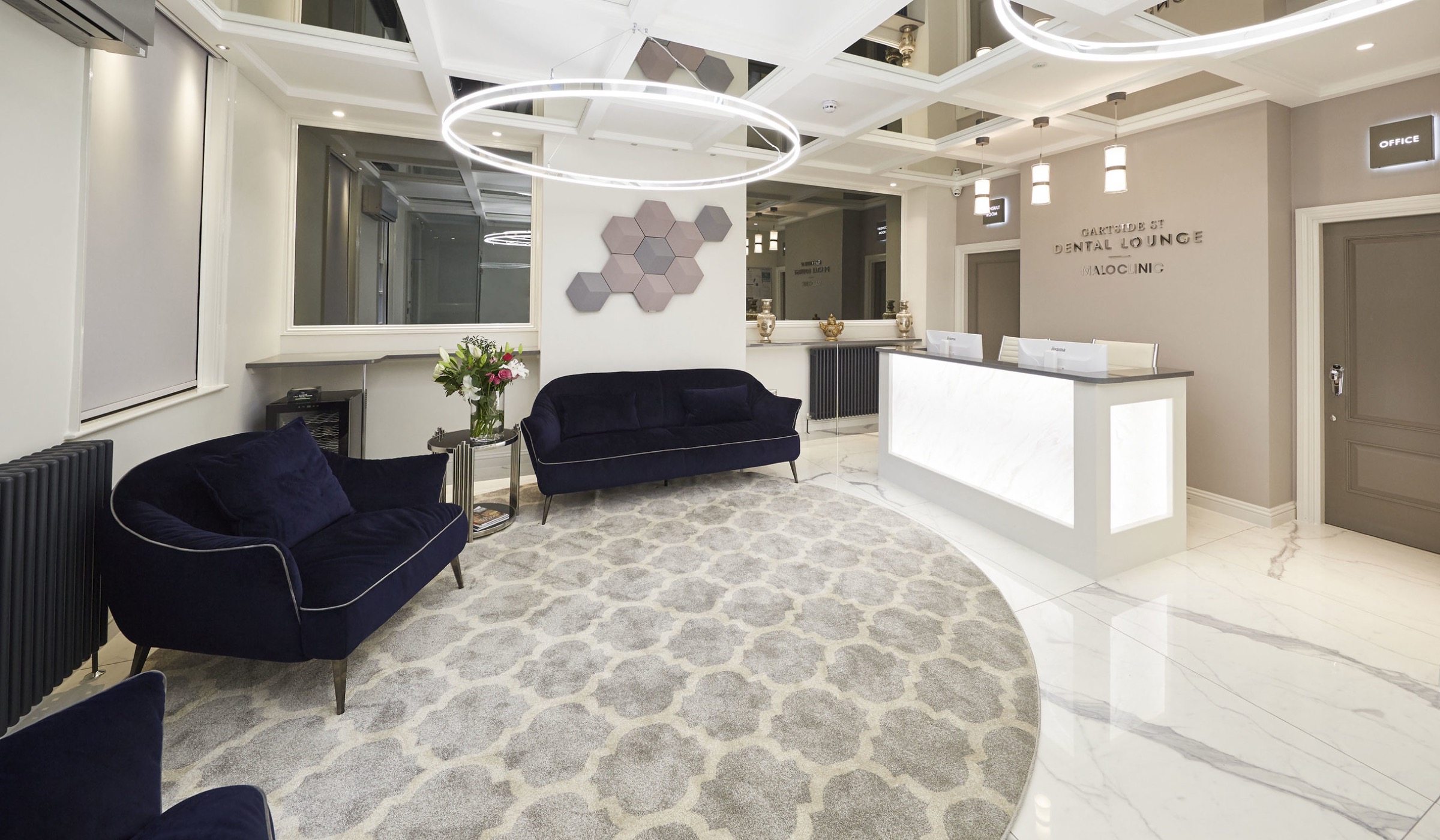
We also pay close attention to the sensory environment, because for many people anxiety is triggered by sound and smell as much as by the work itself. You are welcome to bring your own headphones and play music or a podcast through the appointment. We can offer a soft blanket, dim the overhead lighting, and book you into a morning slot when the practice is quieter and your own energy is usually highest. Before any injection we apply a topical anaesthetic gel to numb the gum, so the needle itself is rarely the first sensation you feel — many patients tell us afterwards they did not realise the injection had even happened.
If you would prefer not to be fully alert during your appointment, we offer two main levels of clinical sedation in the UK private setting. The lighter option is oral sedation, usually a small dose of a benzodiazepine such as diazepam taken about an hour before your appointment. You remain awake and able to talk to us, but the edge of the anxiety is dulled and the time tends to pass much more quickly. You will need a friend or family member to drive you home and stay with you for the rest of the day, but the practical impact on your week is small.
For more severe anxiety, longer procedures, or patients with a true phobia, we can arrange intravenous (conscious) sedation. This is administered by a separately qualified sedationist working alongside your dentist, with continuous monitoring of your oxygen saturation, pulse, and blood pressure throughout. You remain conscious and responsive — if we ask you to open wider, you will — but most patients afterwards remember almost nothing of the appointment itself. IV sedation is widely used in UK private dental practice for nervous patients undergoing implant placements, multiple extractions, or any treatment that has previously felt impossible.
It is worth being clear about what sedation is not. It is not general anaesthetic. General anaesthesia in dentistry is now confined almost entirely to hospital settings in the UK and is reserved for very specific paediatric or special-needs cases. The sedation we are talking about is far gentler — you are technically awake the whole time, you breathe on your own, and you can be roused easily. Recovery is usually a few hours of grogginess and nothing more.
There are a few practical things you can do yourself to make any dental visit easier. Eat a normal meal beforehand unless we have specifically told you to fast. Avoid coffee and energy drinks on the morning of the appointment, because caffeine amplifies anxious physical symptoms like a racing heart. Bring someone with you for the journey if it helps — they cannot usually sit in the surgery during the appointment, but knowing they are in the waiting area can take the edge off. Writing down your worries beforehand and handing the list to the receptionist or dentist can also be useful, especially if you find it hard to articulate them on the spot.
One of the patterns we see most often, and one we want to reassure you about, is what we sometimes call the comeback curve. Patients who arrive for that first cautious meet-the-practice visit are often the same patients who, twelve months later, are sitting comfortably in the chair for a routine hygiene appointment without sedation, without headphones, and without the heart rate they had on day one. The first visit is genuinely the steepest part of the climb. Once a single positive experience is in the rear-view mirror, everything that follows is easier.
If your specific worry is gag reflex or a tendency to panic when reclined, please tell us. There are practical adjustments that help: smaller instruments, working in shorter bursts, propping you up at a less-flat angle, and pacing the appointment around your breathing rather than the dentist’s. For some patients with gag-reflex issues we use distraction techniques such as squeezing a stress ball or focused breathing patterns; for others a low dose of oral sedation is the simplest solution. There is almost always a route through.
If you genuinely cannot face even a clinical room yet, please know that we can still help you make a start. We are happy to do a short pre-visit at the practice that involves no clinical work whatsoever — a tour of the building, a coffee, a conversation with the dentist in the consulting room rather than the surgery. We can also do an initial chat by phone or video so you arrive on the day already knowing the voice and face you are meeting. None of this is unusual; we do it regularly for patients with severe phobia.
The thing we most want you to take away from this post is that the path back to dental care does not have to start with a procedure. It can start with a phone call, a tour, or a chat. Manchester has plenty of excellent dentists who can drill and extract, but care for nervous patients is about how the practice handles the time around the dentistry, not the dentistry itself. If you have been postponing, postponing is the most expensive option — small problems quietly become bigger ones — but the right kind of first visit can be genuinely calm.
If any of this resonates, you are welcome to book a new-patient consultation and tell us in the booking notes that you are nervous. We will block out extra time, brief the team, and structure the visit around what works for you. There is no pressure to commit to treatment on the day, and there is no judgement at any point about why it has been a while. Booking does not commit you to anything beyond a conversation. Ready to Transform Your Smile?
Take the first step towards your dream smile. Book a free consultation with our expert team at our Manchester clinic and discover how we can help you achieve the confidence you deserve.